
New Jersey Citizen Action Education Fund
Navigating the health insurance system can be difficult for anyone. For many immigrant and mixed-status families in Newark, Elizabeth, and the surrounding communities, the process is riddled with extra obstacles: language barriers, confusion over eligibility, and, increasingly, fear that seeking coverage could put a family member at risk. As federal healthcare policy has shifted repeatedly in recent years, many residents of the greater Newark area have found it harder than ever to know what coverage they qualify for, or how they can attain and keep their coverage.
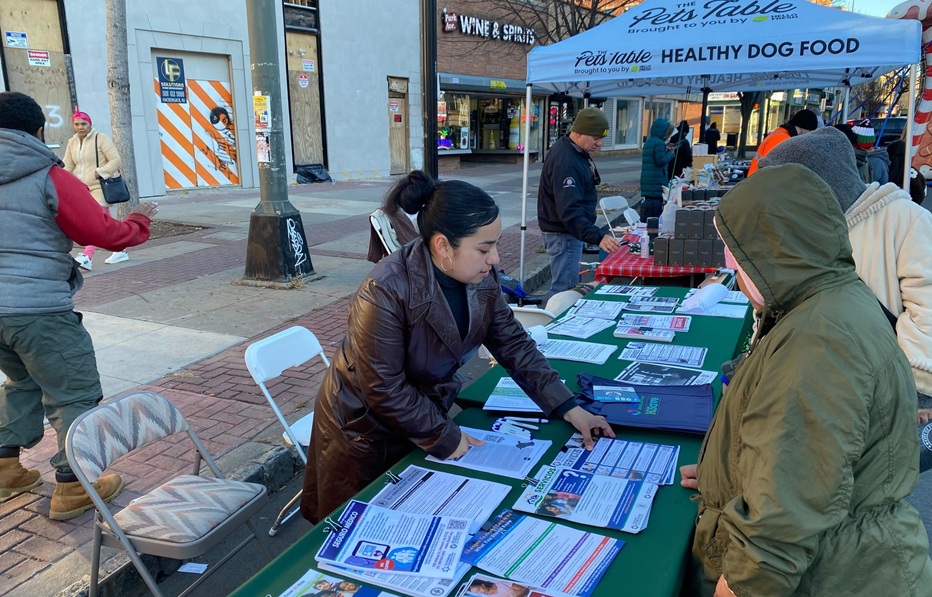
Since 2022, HFNJ has supported New Jersey Citizen Action Education Fund’s (NJCAEF) Health Care for All Education and Outreach Project to educate the public on these important issues. Three grants of $130,000 each ($390,000 total) have funded bilingual, community-based outreach designed to keep families connected to the coverage they’re entitled to.
Through this project, NJCAEF’s outreach staff produced fact sheets, digital media, and workshop materials in English, Spanish, and Creole covering Medicaid eligibility, ACA marketplace enrollment, and programs like NJ FamilyCare and Cover All Kids. The team distributed this information through canvassing, tabling events, and workshops across Essex and Union counties, while a subgrant to Ironbound Community Corporation extended outreach directly into low-income immigrant communities through its Family Success Center.
The reach has been substantial. In the most recent grant year alone, NJCAEF’s efforts touched more than 500,000 individuals—17,433 through in-person events and workshops, and the remainder through digital outreach. Ten canvassing days brought staff door-to-door to 1,222 residents. These efforts generated 1,091 referrals, and ultimately helped 608 individuals secure health coverage. Since the project began in 2022, cumulative outreach is estimated to have reached people more than 1.1 million times, generated over 10,600 referrals, and educated more than 29,400 individuals through dedicated health literacy events.
NJCAEF found that in-person events (canvassing, tabling, and workshops) remained the most effective way to build the trust needed to bring hesitant families into the system, even as some events saw lower turnout in 2025 amid a climate of uncertainty. In response, the organization leaned further into face-to-face outreach and nimble, easily updated digital materials that could keep pace with fast-changing rules.
While HFNJ’s funding for this phase of the project has concluded, NJCAEF will build on the three years of trust, reach, and infrastructure that HFNJ’s investment helped establish across Essex and Union counties.