
Interview: Allison Trimarco on Today’s Fundraising Climate
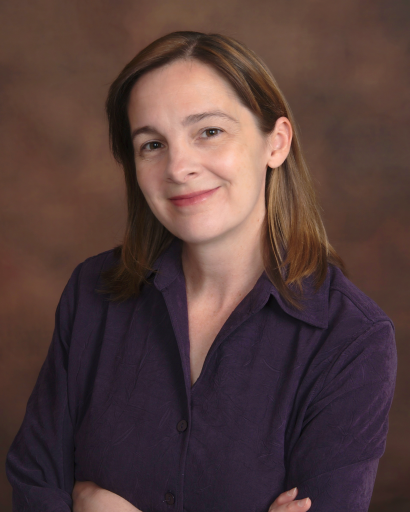
June 17, 2025Allison Trimarco is a consultant focused on helping nonprofits thrive through strategic planning, fundraising, and board development projects. The Healthcare Foundation of NJ tapped her to lead two highly successful training sessions for HFNJ’s community partners this year to help them amplify their ability to reach individual donors. We spoke with Allison to learn more about how the practice of fundraising has changed in recent years, and how nonprofits can – and must – adapt to today’s challenging financial environment.
1) Tell us a little about the consulting work that you do for nonprofits.
At Creative Capacity, we collaborate with nonprofits to help them find effective ways to advance their missions. This usually involves strategic planning, fundraising, and board development work.
2) What shifts are we seeing in how individual donors are contributing to charity in recent years – and what does this mean for nonprofits?
Historically, most nonprofits with an individual giving program had a large group of donors giving smaller gifts and a small group of donors giving larger gifts. That large group of donors giving $500 a year or less was really important for stability – they were loyal givers, and taken all together, their gifts often accounted for 15%-25% of an organization’s individual giving. In the past ten years, this model has shifted substantially. The Fundraising Effectiveness Project’s data from the end of 2024 shows that gifts of $500 or less now account for just 6% of individual giving dollars, and gifts of $5,000 or more account for 78% of all individual giving.
3) What are the greatest predictors on whether an individual will choose to contribute to a nonprofit? And has this been changing recently?
In the past, a donor’s age and educational background were the most likely predictors of their giving interests. Recently, household income has become the most influential factor. The dominance of larger gifts tracks the overall trend of more charitable giving coming from households with annual incomes of $250,000 or more. Things like the rising cost of housing, health care, and student loans have caused people with more moderate incomes to give smaller amounts, less frequently.
4) How do older and younger donors differ in the causes they support and their giving patterns?
We have five living adult generations in America right now, and each of them seems to take a different approach to their giving. Most of our traditional fundraising strategies were shaped by the preferences of “Matures” (people born before 1945) and Baby Boomers. While donors of all ages still give to religious congregations, donors under the age of 60 are increasingly focused on racial and social justice, climate change, and the environment. It’s especially important to have a strategy to engage Gen X donors (people currently between the ages of 45 and 60), who are often involved volunteers as well as givers.
5) Why is retention of donors so important to nonprofits – and is there anything they can do to increase their retention rates?
Having a committed group of donors who will routinely support your organization is critical for financial stability. Donor retention has been on a substantial downward trend in the past few years. To reverse this, every organization should have a strategy for cultivating brand-new donors so they begin to feel connected to the mission. Personal communication that demonstrates how the organization (and by extension, the donor’s gift) is making a real difference is essential to building a long-term relationship with each giver. You want even new givers to feel proud to be part of your work. If new donors don’t renew their gifts within 12 months, the likelihood that they will ever renew plummets.
6) What can organizations do to activate their boards to help accelerate their fundraising efforts?
Some board members are naturally ace fundraisers, but most are not. They need encouragement and support to participate. Try structuring board fundraising activities as short-term projects with a start and end date. For example, have a team of board members agree to support donor renewal by sending personal notes or calls over a six-week period. This kind of concrete task is more manageable for board members, and it aligns with your overall fundraising strategy.
7) If you could give one piece of advice for development staff at nonprofits, what would it be?
Play the long game. We often get stuck in “the way we’ve always done it” because we are overwhelmed by our to-do list for today. But the only way to meet next year’s goals is to work on them this year. Make sure your strategy includes a focus on renewing current donors and cultivating larger gifts – both of which take time and energy well in advance of the gift arriving. Those long-term relationships will protect your organization’s stability over time.