
HFNJ @30: Lester Lieberman and the Founding of HFNJ
February 9, 2026
Throughout 2026, we are running a series of articles on the first 30 years of the Foundation’s history and legacy. Read the articles here:
The Visionary: Lester Lieberman and the founding of HFNJ
In 1996, Newark Beth Israel Medical Center (NBIMC) was sold to the Saint Barnabas Corporation. $125 million from the sale became the corpus of a new foundation – originally called the Newark Beth Israel Foundation and soon changed to The Healthcare Foundation of New Jersey (HFNJ) – which was dedicated to advancing quality healthcare in greater Newark and the Jewish community of Metrowest NJ.
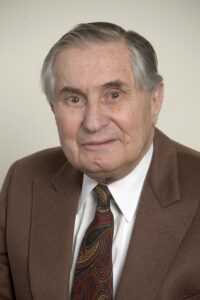
HFNJ’s founding is largely attributable to the vision and energy of one man: Lester Z. Lieberman. Invariably described by those who worked with him as a man of action with an indomitable personality, he navigated changing times to build a lasting legacy for the future.
“Lester was a visionary and a gifted leader, who saw opportunities where others did not and had the will to make great things happen,” said Beth Levithan, who succeeded Lieberman as HFNJ board chair in 2013.
Lieberman’s own passionate devotion to NBIMC and its mission was deeply personal. In 1964, the hospital’s physicians had saved the life of his youngest daughter from a severe case of spinal meningitis. This devotion led him to faithfully serve on the board of the hospital for 27 years, including nine years as its chairman.
A self-made man, Lieberman was a native son of Newark’s vibrant South Ward Jewish community. He graduated from Weequahic High School and went on to receive his bachelor’s degree in mechanical engineering from Newark College of Engineering (now NJIT), working odd jobs as a janitor and shoe salesman to put himself through school. He started Atmos Engineering in 1960, which he subsequently sold to the multinational engineering firm Clarkson Industries. Clarkson made Lieberman its President and CEO, giving him responsibility for engineering work in 65 countries. In addition to his professional success in the engineering field, Lieberman also became a successful commercial real estate investor.
Lieberman applied the same energy and forward-thinking approach to chairing “The Beth” as he did to his business career. As chairman of the board of the hospital during the late 1980’s and early 1990’s, Lieberman recognized that the changing healthcare environment required thinking differently about its structure. Shifting demographics of Newark’s South Ward made NBIMC a safety net hospital – reliant on Medicaid and charity care reimbursements from the government which did not fully fund the actual cost of the care provided. Yet at the same time, the hospital contained world-class components such as its cardiac department and research facilities that would be a valuable part of any healthcare system. By joining a larger hospital system such as the Saint Barnabas Corporation (which has now morphed into RWJ Barnabas Health), the hospital would have the resources it would need to survive and continue to provide critically-needed medical care to the community.
As he sought to preserve the hospital through a sale, Lieberman also recognized that the unique public mission of “the Beth” also had to endure. The hospital was established in 1901 by members of Newark’s Jewish community and infused with the hospital from its founding are the Jewish traditional values of tzedakah (charity and righteousness) and tikkun olam (repairing the world). To ensure that the public mission of the hospital would continue in both the hospital’s catchment area in Newark and its environs and the Jewish population of Greater Metrowest, NJ, HFNJ was spun off as a separate entity solely dedicated to continuing that aspect of its mission.
This sale made HFNJ one of the early “hospital conversion foundations,” the term applied to foundations created from the sale of formerly non-profit hospitals. In fact, based on his experience with the NBIMC sale, Lieberman played an active role working with legislators to codify the legal procedures surrounding such transactions – ensuring that the community-first spirit that animated the sale of NBIMC would be echoed in future sales.
Lieberman would chair the board of the newly formed foundation from 1996 until his death in 2013. He was survived by his wife of 56 years, Judith Lieberman, and his daughters Susan and Jane.
He had brought his indelible personal stamp to the Foundation. He hired Mark Hochberg, MD, a prominent physician leader who served as Director of Cardiac Surgery at NBIMC, as the Foundation’s first Executive Director. Together, they helped set in place the policies and procedures for the new foundation.
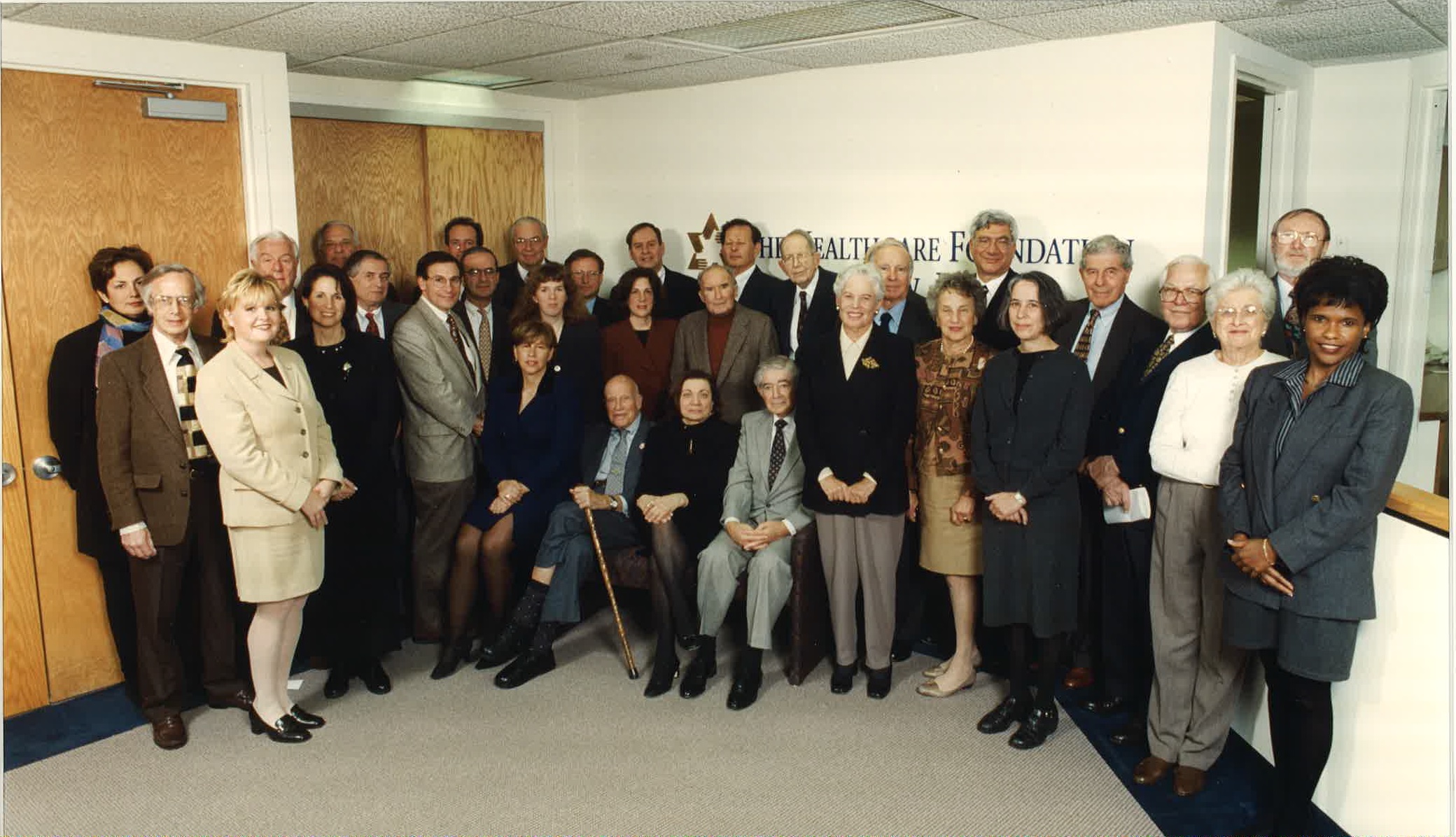
Photo of the HFNJ Board from 1998.
“Many of the features that define HFNJ today – our board structure, the active role of the trustees in reviewing grants, and our mission-driven belief on humanism in medicine – can be traced back to Lester and the legacy he left us.” said Levithan.
Lieberman’s personal commitment to the ideals of humanism in medicine became a consistent theme of giving for the next 30 years of the Foundation’s history. His own interest in humanism stemmed from his experiences as chair of the hospital, where he increasingly heard complaints from patients that physicians sometimes seemed arrogant, disrespectful of their pain, and lacking in empathy. These observations led to his development of a vision that healthcare should encompass the principles of compassion, empathy, respect, and cultural sensitivity. Lieberman summed up these core principles with the phrase “hospitals should treat the patient, not the disease” – a phrase he was known to repeat countless times in meetings over the years.
Lieberman’s bold vision continues to guide the Foundation. Over the 30 years since HFNJ was split off from the hospital’s sale, HFNJ’s original $125 million endowment has grown to approximately $225 million. During that same period, the Foundation distributed more than $200 million to organizations doing vital work in Newark and its environs and the Greater MetroWest Jewish communities. That is Lieberman’s lasting legacy.
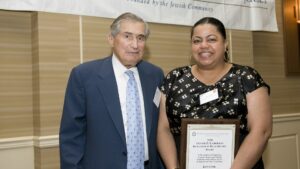
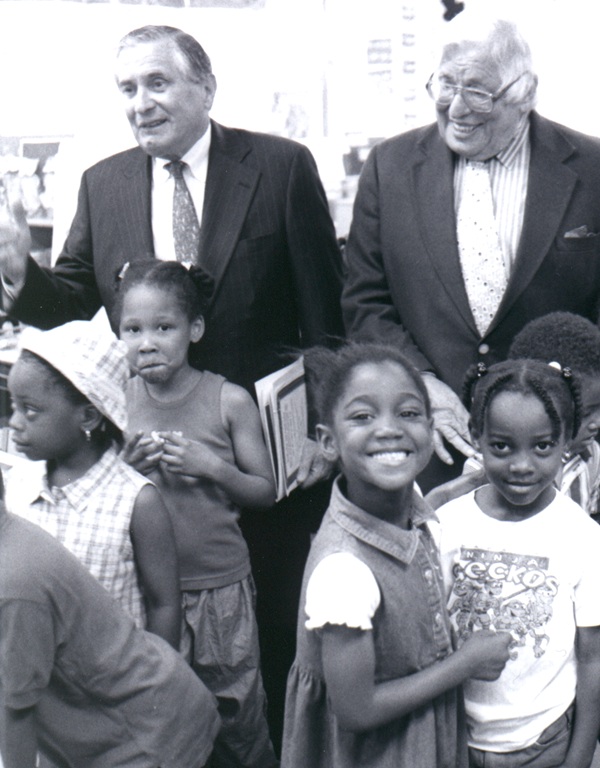
Lieberman with an HFNJ Humanism Award recipient.