
HFNJ@30: Thirty Years of Supporting the Jewish Community of Greater MetroWest NJ
September 21, 2026
Throughout 2026, we are running a series of articles on the first 30 years of the Foundation’s history and legacy. Read the articles here:
Thirty Years of Supporting the Jewish Community of Greater MetroWest NJ
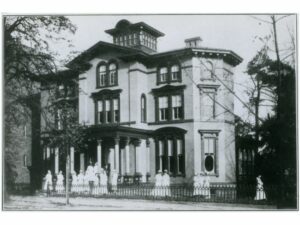
The Healthcare Foundation of NJ defines two main areas for the focus of its grantmaking: the residents of Newark, New Jersey and its environs, and the Jewish community of Greater MetroWest New Jersey. In this way, HFNJ has carried forward the legacy of Newark Beth Israel Medical Center, whose sale in 1996 gave rise to The Healthcare Foundation of NJ. The hospital was founded in 1901 by the Jewish community when Jewish physicians of the era were barred from practicing at other hospitals because of their religion. The hospital was committed to serving the entire community of Newark and its neighboring towns. That commitment, informed by the central Jewish values of tzedakah (charity and righteousness) and tikkun olam (repairing the world), still guides our work today.
 Honoring our roots through grantmaking to ensure quality healthcare for the most vulnerable has remained a consistent direction of the Foundation for thirty years. Indeed, since 1996, in addition to its other grants, HFNJ has invested more than $30 million across 551 grants to Jewish community organizations throughout Greater MetroWest. This support has reached organizations of every size and purpose, from community centers (Jewish Family Service of MetroWest, JCC of Central Jersey) to schools (Golda Och Academy, Joseph Kushner Hebrew Academy, Gottesman RTW Academy) to synagogues (B’nai Jeshurun, Agudath Israel) to the institutions that keep the community’s history and story alive (Jewish Historical Society of MetroWest NJ, NJ Jewish News).
Beyond the steady flow of our regular grantmaking, HFNJ has also invested in several significant initiatives designed to meet emerging healthcare needs head-on. Three of these — spanning three decades and addressing three very different challenges — tell the story of how HFNJ’s commitment to the Jewish community has evolved.
Caring for Holocaust Survivors Through Café Europa
From 2001 to 2009, HFNJ awarded Jewish Family Service of MetroWest eight grants totaling $425,135 to support Café Europa, a program built to give Holocaust survivors living in the MetroWest New Jersey area a place to meet with each other, share stories, and build community. Bi-monthly gatherings such as discussion groups, lectures, films, trips, and holiday celebrations became a lifeline of connection, supported by a memoir writing group co-facilitated by two clinical social workers.
As the program matured, its reach and medical mission deepened. The increasing age of participants meant that outreach to homebound survivors and more intensive case management became critical to reaching Café members. By the program’s later years, 58 homebound survivors were receiving medical transportation, home care counseling, and case management. The program also reached across generations: in one activity, 70 students from Solomon Schechter Day School of Essex and Union (today the Golda Och Academy) took part in an Intergenerational Holocaust Education Project, interviewing survivors and turning those conversations into shared narratives. In this way, the program became a vehicle for transmitting the memories and lessons of the Holocaust from one generation to the next.
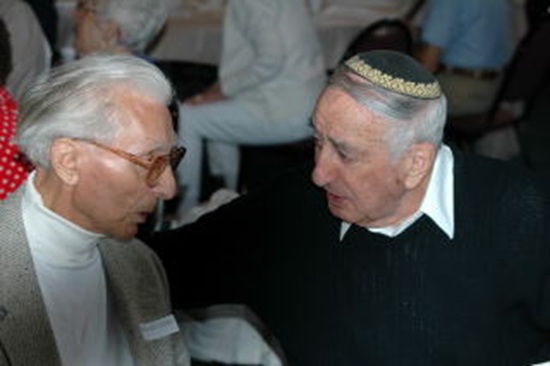
Photo of two Café Europa participants from 2009.
Bringing Social Workers to Synagogues to Provide Person-to-Person Care
From 2007 through 2014, HFNJ invested $519,596 to place part-time social workers inside local synagogues through the MetroWest Synagogue Caring Coalition. The Coalition was based on a novel idea: provide mental healthcare outside of a clinical setting and in the community’s spiritual home. Five synagogues — Temple B’nai Jeshurun, Temple Sharey Tefilo-Israel, Temple Beth Ahm, Temple Ner Tamid, and Agudath Israel — hosted social workers for five to ten hours a week, offering individual and family consultations, case management, referrals, and client advocacy, while additional synagogues opened their doors as venues for support groups.
Over seven years, the social workers became woven into the culture of each congregation, serving families through life’s transitions such as new parenthood, deaths in the family, and the challenges of growing older. Families received care in a setting where spiritual and emotional support could exist side by side. By the program’s final phase, an estimated 1,000 congregants a year were being served. This novel approach of reaching clients outside of traditional clinical setting became a model for service delivery that was replicated across North America.
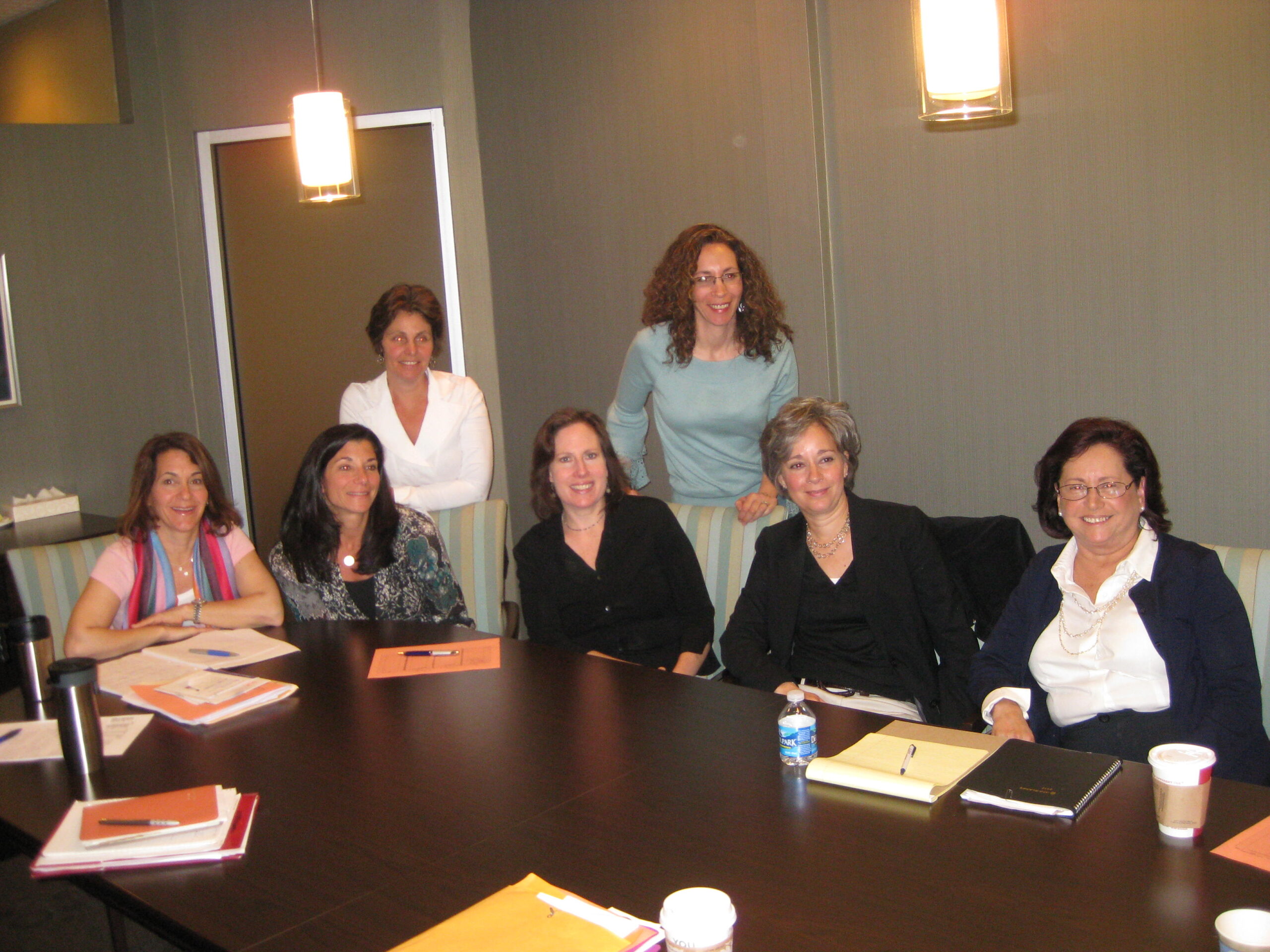
A meeting of leadership of the MetroWest Synagogue Caring Coalition in 2010.
Raising the Bar in Behavioral Health Care for Jewish Teens
In 2023, as the COVID lockdowns waned, teens across the nation were navigating rising rates of anxiety, depression, and isolation — and Jewish teens were facing those pressures alongside a troubling rise in antisemitism. HFNJ responded with an extensive listening and learning process, gathering input from more than 50 professionals and community stakeholders, before launching a targeted initiative grounded in prevention, early intervention, and humanistic community-based care. The subsequent Hamas attack on Israel in late 2023 compounded the challenges facing the community.
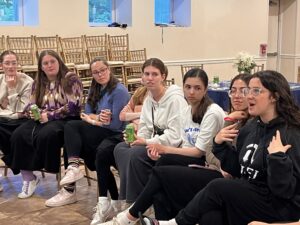 In 2024, HFNJ awarded nearly $800,000 across two grant cycles to programs designed to improve behavioral health support offered to Jewish teens in our community. With renewal grants in 2025 and 2026, the Foundation’s total investment in this ongoing initiative has grown to more than $1.5 million today. Organizations awarded through the initiative include Moving Traditions, Jewish Educational Center, Joseph Kushner Hebrew Academy & Rae Kushner Yeshiva High School, Jewish Family Service of MetroWest, Temple B’nai Jeshurun, Rabbinical College of America, and the Greater MetroWest NJ Day School Initiative.
Early results are encouraging. Schools have reported noticeable changes in school culture surrounding mental health, including increased engagement in open discussions about mental health. Several programs have demonstrated real improvement in mental health outcomes, including significant reductions in the proportion of the student population considered at “high risk” for mental health concerns. An additional outcome of this initiative has been the creation of a cohort of grantees designed to learn from one another and share resources — a coordinated ecosystem of culturally responsive mental health support.
Looking Ahead
Thirty years after Newark Beth Israel’s sale gave rise to the Foundation, the values that built that hospital in 1901 — humanistic care, tzedakah and tikkun olam — still guide every grant we make. As the needs of the Jewish community have evolved, from Holocaust survivors aging in place to teens navigating mental health crisis, HFNJ’s commitment to meeting those needs has never wavered. While we know that the next thirty years will look different from the last, one thing remains constant: the Foundation’s enduring commitment to its roots and continued investments in the health and future of the Jewish community of Greater MetroWest.