
HFNJ@30: Seizing Opportunities to Meet the Healthcare Needs of Each Era
November 9, 2026
Throughout 2026, we are running a series of articles on the first 30 years of the Foundation’s history and legacy. Read the articles here:
- Article 1: Celebrating 30 Years of History
- Article 2: Lester Lieberman and the Creation of HFNJ
- Article 3: Humanism at the Heart of HFNJ
- Article 4: HFNJ’s Systemic Approach to Easing Hospital-Acquired Delirium
- Article 5: Interview with Amy Schechner
- Article 6: HFNJ’s Jewish Heritage
- Article 7: Meeting the Healthcare Needs of Each Era
Seizing Opportunities to Meet the Healthcare Needs of Each Era
Everyone needs access to quality medical care, affordable medications, healthy environments, well-equipped hospitals, and, above all, compassionate care delivered with a human touch. For thirty years, The Healthcare Foundation of New Jersey has worked to meet those needs in our region.
The healthcare industry has also changed dramatically over those three decades. New laws have transformed access to health insurance. Innovative care models have opened doors to better treatment. Throughout its history, HFNJ has sought to recognize these inflection points and respond thoughtfully and quickly to seize the moment.
Three initiatives illustrate how the Foundation has adapted its grantmaking to each era’s needs and opportunities, working closely with community partners to direct our limited resources to make the greatest difference.
Expanding Healthcare Coverage Through the Affordable Care Act
When President Barack Obama signed the Affordable Care Act (ACA) into law on March 23, 2010, it ushered in a significant expansion of health insurance coverage in the United States. Beginning in 2014, the law expanded Medicaid eligibility in participating states, including New Jersey, and established health insurance marketplaces where individuals and families could purchase private coverage, often with federal subsidies.
For communities like Newark, where a disproportionate number of residents historically lacked health insurance, these reforms presented an extraordinary opportunity. But families needed to understand their new options and navigate the often-difficult enrollment process.
HFNJ recognized this challenge early. In July 2010, just four months after the ACA became law, the Foundation participated in a national gathering of philanthropic organizations at Brandeis University to explore how foundations could help translate the legislation’s promise into tangible improvements in healthcare access.

In 2013, anticipating the launch of the new insurance marketplaces and Medicaid expansion, the Foundation established its New Jersey Insurance Marketplace/Medicaid Expansion Education and Outreach Initiative. HFNJ conducted community outreach and awarded $234,788 across 13 grants to help local community organizations connect uninsured residents with newly available coverage. These grants supported outreach, education, and enrollment assistance. By targeting trusted, well-established community organizations, the Foundation ensured the funds went to trusted groups best positioned to reach underserved residents.
As a result, thousands of local residents joined the ranks of the insured and received the opportunity to establish a relationship with a primary care provider, obtain needed medications, and address medical problems before they became emergencies.
Bringing Behavioral Healthcare into Pediatric Primary Care
A few years later, another shift in healthcare policy created new opportunities to improve how care was delivered.
Physical healthcare and behavioral healthcare are often provided in separate systems, creating challenges for patients and caregivers. In response to strong advocacy from health providers and the community, the New Jersey Department of Health issued a waiver in 2015 allowing licensed primary care facilities to share clinical space with behavioral health providers. Combined with other regulatory changes in federal healthcare policy and Medicaid, this opened new opportunities for community health centers to bring medical and behavioral health services together under one roof.
HFNJ had been exploring this model for several years. Foundation staff and trustees recognized the growing evidence that physical and behavioral health were closely connected and that providing both forms of care in a coordinated setting could lead to better outcomes.
In 2015, the Foundation convened healthcare providers, clinicians, policymakers, and community stakeholders to examine opportunities to integrate pediatric care. The result was the HFNJ Integrated Pediatric Primary Care Initiative, launched through an RFP in December 2015. The following year, HFNJ announced five grants totaling $828,032 to support innovative models of integrated pediatric healthcare in Newark.
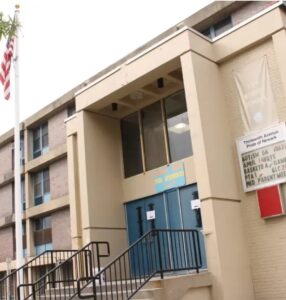
The largest grant, $226,489, went to Newark Beth Israel Medical Center to develop the region’s first fully integrated pediatric practice at the Children’s Hospital of New Jersey. The funding supported a full-time psychologist, a care navigator, and technology upgrades to integrate online behavioral health screening software with existing electronic medical records.
Additional grants supported integrated pediatric and prenatal services at St. James Health; integrated care at NJCRI; a care team serving families in public housing through Rutgers Community Health Center; and behavioral health services within the school-based health center at Newark’s 13th Avenue School run by Central Jersey Medical Center (formerly Jewish Renaissance Medical Center).
The seed funding helped create programs that continue to thrive today. As a result, for more than a decade, families in Newark have had access to coordinated, family-centered care in their own neighborhoods.
Responding to the Unprecedented Challenge of COVID-19
At times, HFNJ has also adapted to challenging developments in the healthcare landscape. When COVID-19 began spreading across the United States in early 2020, healthcare providers urgently needed personal protective equipment, sanitizing supplies, and equipment to protect patients and healthcare workers. At the same time, community organizations struggled to maintain essential services as offices closed and in-person services were abruptly curtailed.
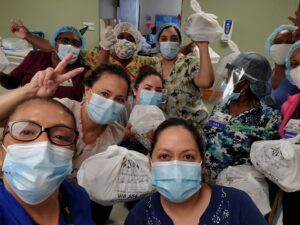
Staff at Trinitas Regional Medical Center, 2020
HFNJ responded with speed and flexibility, adapting its grantmaking processes to meet the emergency. Within the first two months of the crisis, the Foundation awarded more than $1 million in one-time, emergency grants. Additional funding followed throughout the year, including support to help hospitals and health centers prepare for subsequent waves of infection. At the same time, the Foundation eased some restrictions on active program grants to help community partners adapt to changing needs. Emergency grants helped community agencies purchase protective equipment, obtain Chromebooks and other technology to deliver counseling and services remotely, and distribute food to families struggling to meet basic needs.
Recognizing the pandemic’s impact on the Jewish community, the Foundation launched a COVID-19 Synagogue Initiative, inviting approximately 25 congregations in Greater MetroWest to apply for grants of up to $5,000. The program was subsequently extended to Jewish day schools in the Foundation’s service area.
By year’s end, HFNJ had awarded $3.4 million specifically to combat the pandemic and about $3 million more to programs that expanded or adapted their services in response to COVID-related needs. HFNJ’s response showed its willingness to adjust when circumstances require it, helping organizations continue serving their communities in times of greatest need.
Even as the immediate threat of COVID-19 receded, another healthcare emergency was becoming apparent: a nationwide behavioral health crisis, particularly among children and adolescents.
HFNJ again pivoted in response – substantially increasing its funding commitments to address youth mental and behavioral health. This focus area grew in prominence in HFNJ’s grantmaking portfolio and became the highest-funded focus area from 2023 to 2025. Foundation leadership awarded more than $12 million in behavioral health grants between 2021 and 2025, reflecting a sustained investment in addressing one of the region’s most pressing healthcare challenges.
Thirty Years of Responding, Adapting, and Making a Difference
Over three decades, the challenges facing Newark, its surrounding area, and Jewish Greater MetroWest communities have changed, sometimes gradually and sometimes overnight. New legislation has opened doors. Advances in healthcare have created possibilities. Unexpected crises have demanded immediate action.
While the needs of each era may change, the Foundation’s commitment has not. Through it all, The Healthcare Foundation of New Jersey has worked to anticipate opportunities, listen to community partners, and invest strategically in solutions to make a lasting difference. As HFNJ enters its fourth decade, the qualities of adaptability, partnership, and compassion will continue to guide our work.